If you know me, you probably know how much I want to go to space, so of course I was excited to hear of a competition that might enable that dream to come true.
Indeed I was. I signed up to the Lynx/Axe Space Academy as soon as I could, before it hit the mainstream with adverts and marketing. I begged people to vote for me. Not something I’d normally do, but this is space we’re talking about… all’s fair etc.
As I went to share my entry on Facebook I was offered some pictures to go with my post. Me in an astronaut suit, some generic Lynx Space Academy branding, or pictures of a (presumably) male astronaut with a hot girl swooning. Hmm. Not quite sure that’s what space travel is about. I clicked next, then recoiled in greater horror as the next image consisted of the hot girl’s clothes all over the floor of the again (presumably) male astronaut.
Look, I know that Lynx (Axe in the US), is predominantly a male brand. I know that their advertising generally consists of massive sexual stereotypes, I even understand why they use such tactics. They obviously get results (whether the same can be said of their antiperspirant, I wouldn’t know). But here’s the thing that gets me, advertising and cheap stereotypes aside, you’re messing with SCIENCE now. Don’t do that.
As if scientific disciplines don’t have a legacy of sexism inherent in them already, now we have a global, big bucks advertising campaign to reinforce the idea that science is a male domain. In case you weren’t aware, women are astronauts too – not just drooling airheads trying to bag ourselves a high profile guy in a space suit.
It reminds me of when I first got excited about space and I talked to my neighbour about it. “Oh!” She said, eyes wide, “you want to marry an astronaut?”.
“No.” I replied, somewhat firmly. “I want to BE an astronaut”.
What decade are we living in? Really? Does this brand think it is alright to suggest that men get to be astronauts and women are just eye-candy? Because I don’t think that’s okay. The tag line for the competition is “Leave a man, return a hero”. I’m just wondering which man I should leave.
Jokes aside, the way this competition is marketed is damaging. Not only did it make smart friends of mine assume that only men were eligible to apply, but it adds to an increasing “blokeification” of science.
There are high profile science shows at the moment, Wonders, Sky at Night, Science Club, Infinite Monkey Cage. That’s great – more science! Yay! But when you look at them, it’s all getting very blokey. Where are our female role models? It’s not that smart, engaging women don’t exist, it’s just that they don’t seem to be welcomed into the fold. Mary Beard’s experience with Question Time is enough to make any woman think twice about braving TV. I dared have an opinion about Professor Brian Cox’s Wonders of Life show last night and was instantly dismissed as “just jealous” then told I should front Loose Women because all I do is moan. This doesn’t strike me as constructive, and neither does the Lynx advertising campaign.
The TV spots show a pretty woman who needs rescuing from a fire, cue good looking male fireman to save this “damsel in distress”. Then an astronaut appears, and our fickle beauty changes her affections to him: “Nothing beats an astronaut, ever”.
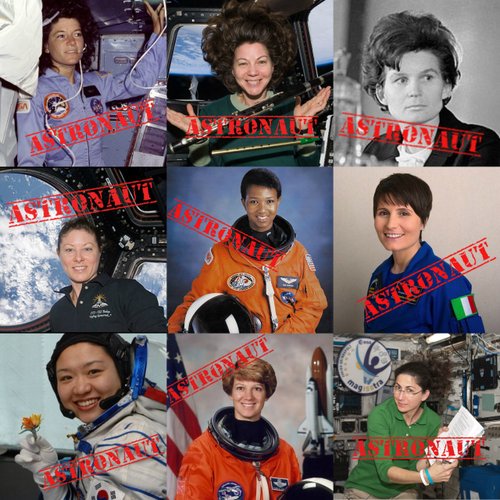
Well I’d like to see a remake of that advert, but as the astronaut raises their helmet it turns out to be Cady Coleman, Tracy Caldwell-Dyson, Peggy Whitson, Valentina Tereshokova, Sally Ride, Eileen Collins, Soyeon Yi, Samantha Cristoforetti, Nicole Stott… (I could go on) and the fireman goes swooning over to her instead! (In fact, if you’ve some video ninja skills let’s make it happen.) Women are more than sex objects, women can be smart, and women can be astronauts too.
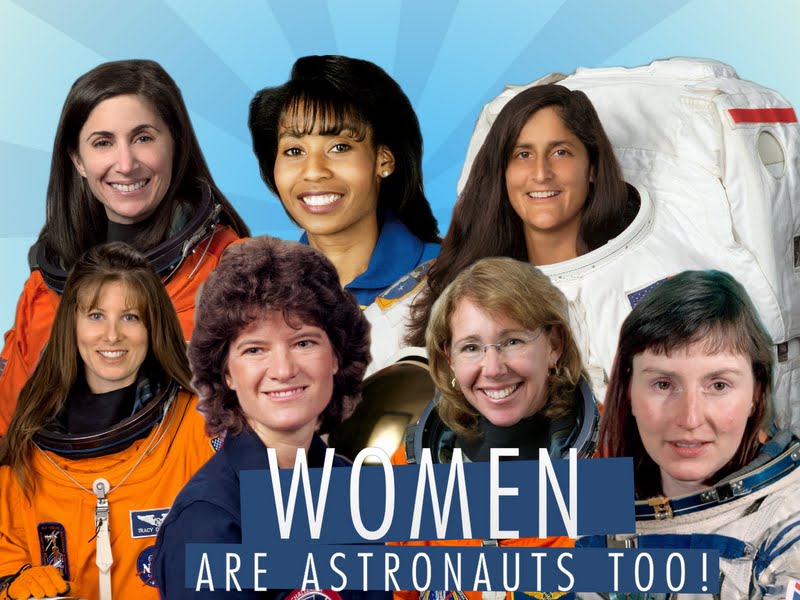
You might think I’m making a fuss over nothing, perhaps say it’s just a humorous skit to sell deodorant. But I think it shows there is still a wider problem in society. If we’re going to encourage women to follow careers in science and engineering we need to stop the undercurrent of “girls are pretty trophies, and boys are brave astronauts” etc.
As for this Lynx competition, let’s make a stand. I’m still in the running and I’d love your vote. Not only because I would cherish a chance to get to space, but also because I’d love to get enough momentum to make the people behind the campaign stop and think for a moment about their sexist stereotypes.
I’m not the only one out there that feels affronted by this. I’ve been contacted by @Scientelle on Twitter who is supporting the #astrogrrls who have entered this competition. So come on, let’s make some noise and get heard.
I thought we’d moved on from the early days of the space programme when only macho male military test pilots got to be astronauts – let’s not step back again.
—–
UPDATE

Statement from Lynx UK (January 29th, 2013)
As was suggested by a commenter on this post, I got in touch with the press office of Lynx UK. The lady I spoke to seemed genuinely shocked at the idea that people might find elements of the campaign sexist (which in itself stuck me as a little odd), but was quick to point out that the competition had gone through their legal department. She provided me with the following “brand response”:
The Lynx Apollo campaign is meant to be a humorous play on mutual attraction illustrating the impact the product will have on the opposite sex. It is designed to be exaggerated and light hearted and is absolutely not designed to demean women in any way.
As an advertiser we strive to be responsible, the competition adheres to strict internal and external guidelines. Women can enter this competition, if they were to make it through to the second round they would not be at any disadvantage.
Personally I’m not sure that saying it’s “meant to be light-hearted” is enough to excuse it. Light-hearted sexism is still sexism and still feeds into what society as a whole deems acceptable. I’m really uneasy with a global advertising spend that gives the impression that women are just pretty things to be won. For those of you who say “it’s aimed at men, a female brand could run its own competition”, that’s quite right, but I can’t think of any brand that would promote something for women so obviously at the expense of men. Can you?
Statement from NASA (30th January, 2013)
I genuinely feel strongly about this issue so I brought this post to the attention of NASA Administrator Charlie Bolden. I know that NASA put a lot of effort into ensuring their education and outreach programmes reach people from diverse backgrounds. He read my email with concern and put me in touch with the Rebecca Keiser, the NASA representative to the White House Council on Women and Girls who kindly provided me with this statement from NASA:
“Even today in 2013, many images of women (and stereotypes of men) in the media show that we still have a lot of work to do regarding the role of women and their importance to fields like STEM. We need to do as much as we can to project a much more realistic and positive image of women, as well as encourage more girls to enter into STEM fields. We are working hard at NASA on this effort and we hope to do even more.”
Well said. I’m pleased (and indeed quite honoured) that Charlie Bolden took my email and this issue seriously. Perhaps Lynx could learn something.
UPDATE (05/02/13): National Restrictions and the Super Bowl advert
Men Only
My friend (and fellow ISU alumnus) Carmen Victoria from Mexico pointed out that in the Mexican version of this competition only men are allowed to apply. This points to two problems in my mind. Firstly, that given the opportunity to exclude women, Axe/Lynx would choose such a course and secondly, that some countries don’t have the same rules to protect against discrimination that we have here in the UK.
A bit of further sleuthing from good friend and space advocate Remco Timmermans showed that this male only restriction was not limited to Mexico. In fact Russia, Ukraine, Kuwait, Indonesia and the United Arab Emirates join Mexico in making this a male only opportunity. Wow. Russia. Let’s just pause to think who put the very first woman in space – yep, Russia. What an awful step backwards. Thankfully this is not the case in the real Russian space programme where a new female cosmonaut candidate was selected at the end of last year.
The Russian International News Agency, RIA Novosti have written an article on their Russian language site about the fact female Russians are barred from entering this competition. With a bit of Google translate magic, the Russian Axe spokesperson can be roughly translated at this:
“In the offices of the company in different countries slightly different policy for selection of applications for the competition, but in Russia, the application of the girls are not accepted. Same situation in Ukraine, Indonesia, Mexico, Kuwait and the United Arab Emirates. Globally, no such limit, but must be borne in mind that the AXE – a male brand”
Again, we’re back to this argument that I keep hearing “but it’s a male brand, what do you expect?”. In answer, I expect marketers to be smart enough to come up with original, interesting ideas, that don’t have to perpetuate old-fashioned stereotypes of women. I don’t think that “we’re aiming it at men” is an excuse for sexism. It’s a bit offensive to men to assume that the only successful way to market at them is to belittle women, isn’t it?
Super Bowl
As the Ravens and the 49ers battled it out on the field, millions of Americans settled down to watch the big game on television. When I was in the States when the game was on I remember there being a tangible level excitement not just about the game itself, but the adverts. Costing upwards of $4 million for a 30 second spot, companies pull out all the stops to make an impression. Axe knew this would be a great time to get an audience for their Space Academy contest, and of course had an advert for the occasion. Similar to the UK version, a helpless girl needs rescuing (this time from a shark), dotes over hunky male lifeguard, then ditches him for male astronaut. It doesn’t show the Axe product being used like their usual adverts would. There’s no reason they couldn’t have challenged existing stereotypes and still combined this with a space angle. How about having a female astronaut who picks the guy that just doused himself in Axe/Lynx? At least that would show their product actually doing something.
Like I said, Americans take their super bowl adverts pretty seriously. Seriously enough to merit posts on both Forbes and Discovery News. Check out the powerful post by Maha Atal at Forbes – who points out this is not just a case of sexism, but of failed advertising – and the super bowl space advert round-up by Ian O’Neill at Discovery News.
We’ve got this ball is rolling – let’s keep it going. As a study from 2012 sadly shows, there really IS an issue with “enduring cultural stereotypes about women’s lack of science competence that translate into biases into student evaluation and mentoring”.
—–
Follow me on Twitter as @SpaceKate and listen to my space flavour podcasts on Audioboo.
76 thoughts on “Hey Lynx Apollo! Women are astronauts too”
It is so silly that AXE/LYNX can use that kind of advertisement for this contest. Specially in Mexico, the pictures they have been posting on Facebook are extremely sexist: https://www.facebook.com/photo.php?fbid=10151651714258312&set=a.10150167267138312.360522.349200933311&type=1&relevant_count=1
WOMEN ARE ASTRONAUTS TOO!
Hey, why women won’t start own rocket company and get sponsorship from Oprah or Martha Stewart?
I’m not entirely clear on your point here, but if you are saying that women should set up their own rocket company if they want to go to space etc, or “why don’t they?”, then this is my response:
No-one is arguing that companies should be female only – in fact quite the opposite. I’d much rather see women working alongside men as equals.
You should contact Unilever’s press office and raise these issues with them. If you get through to round 2 of the competition (as I hope you will) your selection to go into space will be based not on your performance in the mental and physical tests in that round, but on the judgement of a panel chosen by the competition organisers – the number of judges on the panel, how they have been identified and by whom are all things that have not been made public. They will assess your suitably to go into space based on criteria that they have not published. It is entirely possible that one of those criteria is suitability to appear in further promotional material for the Lynx brand – in other words, women actually may have been excluded from winning this competition. Worth getting their public confirmation that this is not the case (or exposing them if it is the case).
Good call… looks up press office number…
I got in touch with the press office and spoke to a lady who seemed genuinely shocked that the marketing might be thought sexist(!). Here’s the official statement from Lynx (UK):
“The Lynx Apollo campaign is meant to be a humorous play on mutual attraction illustrating the impact the product will have on the opposite sex. It is designed to be exaggerated and light hearted and is absolutely not designed to demean women in any way.
As an advertiser we strive to be responsible, the competition adheres to strict internal and external guidelines. Women can enter this competition, if they were to make it through to the second round they would not be at any disadvantage.”
Also the media needs to treat women and men astronauts equally throughout the whole process, not just when space travel is the dream future career path. I recall during STS-124 there was an on-orbit Q&A with ABC, who asked some general questions and then specific questions for individual astronauts. All the men were asked questions pertinent to their specialist astronaut skills (eg EVAs, piloting) or tasks they’d completed on the mission, while the sole female crewmember – Karen Nyberg – was asked if she got her long hair caught on the velcro much.
nobody does not “need to” do anything. There is a rule in NASA to have 25% women astronauts, it doesn’t come from women’s ability to withstand g-forces, cooperation-ability, proficiency. It is more like sport categories. You take 3 best men weightlifters (that lift above 320 kg) and 1 best woman weightlifter (that lifts some 250 kg) – that’s your crew. As for Axe business – that’s a company that makes products mostly for men. That’s their target audience. That’s where they get money, that’s where they will select astronauts. If Victoria Secret wants to buy 25 tickets from XCOR and make own advertising – they are welcome to do so.
Now I think about it, the good people at XCOR probably don’t want to be on the wrong side of a sexism PR nightmare. 🙂 (None of this is improving your chances of winning this competition, of course – but I like to think the nobler course will always reap the greater reward in the end.)
Completely agree. Popular science in the UK’s media is becoming increasingly macho in a ‘all men down the pub’ kind of way and the Lynx astronaut campaign based on ‘leave a man, come back a hero’ follows in the same vein. There is, admittedly, a lot of intentional irony in the Lynx ads so let’s ask Tampax to sponsor their own astronaut competition – after all, they’ve produced an awful lot of women who can play tennis. Now they go into space too…
This was one of the details I worried about when I first heard of the contest. XCOR is a provider of flight services for the contest and probably doesn’t have much say in the creative license Unilever is taking with this.
Sounds like a good opportunity to have a contest that turns the tables?
Kate, check out http://www.citizensinspace.org for another way to get into space.
Good luck with your campaign Kate, it would be amazing if you got to go into space and what better way to do it than by taking on what is possibly the most sexist advertising campaign I’ve ever seen! I really hope you win, and if not, that you get your wish one day 🙂
I agree completely. Lynx/Axe’s brand *is* sexism. They recognize that their target demographic is teenage boys and teenage boys are sexist little jerks. Instead of trying to fight against this unfortunate part of our culture, they encourage it. Why? Because it sells product.
Kate, Thank you for raising this issue and please continue to campaign. I hope that you win the competition and fulfil your dream of going in to space.
The fact that the NASA Administrator has responded shows how important an issue this is. I work as an Engineer and am disappointed at how few female engineers there are in my profession. There must be thousands if not millions of women in the UK who would make brilliant contributions to Science, Technology, Engineering and Mathematics (STEM) and of course Astronautics!
If only they realised that they were both welcome and needed. I applaud NASA for their work, and am saddened by Lynx for re-inforcing stereotypes that should be long forgotten.
It’s easy to overlook that they’re demeaning women because the objectification of women is so prevalent in advertising. It’s good to have the conversation, and to call advertisers out. I’d love to see them come up with an improved ad.
I’m disppointed, though not surprised, by Lynx’s statement. NASA does a lot of good work in this area and I’m glad to see their reaction.
I while ago I wrote a long, ranty blog post about sexism in science (http://alexanderbrown.info/2012/09/06/i-fucking-hate-sexism-in-science/). A lot of people told me to take a chill pill about off-the-cuff remarks, but I agree that there is something pervasive in our society which makes people think “oh, of course women are equal, but they still fit into these stereotypes”.
I hope you make it to space, Kate!
You got my vote Kate!
In fact, I read this post the day after I was at the Air & Space Museum in Washington DC and I’d just learned all about Sally Ride after reading the testament to her they’ve got there.
It reads beautifully – just seems a shame that they chose to put it right next to the space toilet! But I do think that’s just coincidence – for those who’ve not seen it, it’s inside the replica/former spare shuttle module, which would make sense.
May The Force be with you – I can’t think of anyone I know more deserving (even if I’d be disgustingly jealous if you do win!!) – plus, it would be great to make the Lynx marketing team squirm 🙂
Why are you surprised that a promotion for a men’s product is targeted at men?
I think that you are missing my point here, which is a shame, as I did my best to make myself clear. I’ll try again though. I am not surprised that a male product is being aimed at men. I am annoyed that they feel that in order to do so, they have to do so at the expense of women. I am annoyed that their use of lazy stereotypes is not only being used to market their product, but to market a competition about getting to space. The advert I mention doesn’t show their product at all, it does not promote their product, it promotes their competition, which in turn will help with brand awareness. There is no reason at all that they couldn’t have made an advert that was aimed at men, that was “lighthearted” and fun, that helped market their product within their own brand guidelines, and yet didn’t portray women as trophies.
For example: female astronaut, lots of guys want to get with her because “nothing beats an astronaut”, one guy sprays himself with Lynx, he gets the astronaut. It would fit everything they wanted, fit with their usual campaign, but be an interesting twist on society’s perception.
There is still sexism around. It does affect women in science and technology. There are big organisations, like NASA, that work hard to promote the fact that women can be engineers, scientists and astronauts. Why should we sit back and watch that work undone by big advertising money giving young girls the idea that success for a guy is being a fireman/astronaut, and success for a girl is hooking up with a fireman or astronaut instead of aspiring to be one themselves?
Times are changing, we stand up to racism, so why should we put up with casual sexism like this?
So I was at a Super Bowl party tonight. The U.S. version of this ad – with a woman saved from drowning, but same gist – aired during the game. First off, no one in the room besides me KNEW it was an ad for a contest. Second, I pointed out what the contest was and noted how problematic all the marketing around it has been. The reaction, from a room of apparently progressive sports fans, 50% of whom were women: “Whatever. It’s a men’s brand. If women want to go to space, they can get Venus to sponsor them.” [Venus is Gillette’s line of women’s razors – not sure if it’s around in UK too.] #headdesk
Hi Kate
Really interesting post. It genuinely made me think and I can completely see your point. I think that it’s impressive that both Lynx and NASA took the time to respond to you although it is probably the latter’s words that are more in line with what we’re thinking.
Lynx’s “light-hearted” approach would not be tolerated in a scenario which was racist or homophobic, so why the sexism?
Oh the times they are a-changing…. (apparently).
Hi Kate.
A more thorough analysis of the competition T&C’s reveals that women are explicitly excluding from participation in Russia, Ukraine, Kuwait, UAE, Mexico and Indonesia. Clearly showing the intentions of the global campaign: Unilever will exclude women if they legally can!
Keep up the good work!
I’ve had a similar experience to Maha. Neither men nor women see anything wrong with this. One person I asked rolled her eyes and turned the air blue with her complaints about the pettiness of feminist priorities.
With global economics the way it is, most people have more immediate concerns like earning enough to feed their children. I think that holds for both men and women. And it continues to hold if we restrict ourselves to progressives in developed nations. By all means go to space, Kate. I’m happy to support that dream. I just find this approach very embarrassingly cynical and opportunistic.
Maha’s sports fan audience has the right solution. You don’t get civilians in space by attempting to derail efforts to do so. It isn’t NASA’s role to discriminate against this corporate client or that one. It isn’t Lynx’s role to placate agitators not from it’s consumer base.
The net effect is likely to be that NASA creates an additional level of bureaucracy and that promoters find themselves incurring inefficient marketing expenses by having to cater to a demographic who wont be contributing to future revenues. Then it’s just a matter of time to which side decides this arrangement is politically or economically unprofitable for them. i.e. everyone loses.
I genuinely like the idea of Venus running a competition in the same vein. The brand name itself is already half-way there. It shouldn’t be too hard for their marketing whizzes to come up with a good angle. Ideally, I’d like to see a Lynx-sponsored man and a Venus-sponsored woman go up on the same flight.
Your own odds would be much better in that scenario.
Firstly, I am in no way trying to derail attempts to get people into space. Anyone who knows me and reads my blog knows that I am keen to see as many people as possible getting the chance to experience the wonder of space travel. I am though, trying to raise a serious point about the unnecessarily sexist tones of this advertising campaign. Don’t be fooled, the Lynx/Axe folk aren’t interested in opening up the doors to space – they are interesting in shifting their product. If they really were keen to promote spaceflight for all, they wouldn’t have restricted it to male only applicants in countries they were allowed to do so.
Secondly, I don’t understand your point about NASA and bureaucracy. They are not providing the flights. A commercial space company is. If NASA were providing the flights, there is no way that they would have allowed such restrictions as I mentioned above.
Thirdly, Unilever are a large enough company that they could have tied this in with one of their female brands to make it a more equal offering, but they didn’t.
Fourthly, Even if Venus were to run a contest like this, it is unlikely that they would do so at expense of men, which is my main complaint about these adverts.
Fifthly, note the “#headdesk” at the end of Maha’s comment.
Sixthly, I’m sorry that you find me “embarrassingly cynical”, but that’s your embarrassment not mine. I find the tone of such a comment quite condescending.
#1 is obvious. That they’ve chosen space for their next marketing strategy is quite incidental.
#2 seems like we’re talking at cross-purposes. Your letter to NASA seemed to suggest that NASA was involved in some way. If they’re not, and it’s a purely commercial arrangement then you’re even less likely to get what you’re looking for.
#3 certainly unilever is a large company. The Axe marketers came up with the idea it seems. You need to make the suggestion that unilever expand this idea to include a female product-line rather than complain that they didn’t read your mind.
#4 I disagree. You only need to open a girl’s magazine to see the number of competitions available only to women which men just shrug off. It doesn’t interest them. Some men might be but they don’t see this as an attack on their gender. If Venus really does run a similar competition, I expect your response to be just as vigorous if they decide to limit it to women only (directly or indirectly).
#5 I did notice that Maha was surprised that most people don’t agree with him/her.
#6 In fairness, I’d have happily voted for you but I’m glad I haven’t yet because you’ve taken this issue in a peculiar direction I’m not comfortable supporting. You say you want to encourage women in STEM, so do I. But the difference in your approach and mine is that I think women should have the same options as men. You seem to think that women have let the side down if they don’t want the same things as you do.
Your SpaceKate project is a very laudable one. I would recommend, however, that you don’t tie gender politics into this one because the politics of feminism has been changing very quickly over the last five years. Both men and women seem to be getting quite irritated by cynical privilege seeking from feminists. Your project isn’t intrinsically political. I think you’re making a mistake by making it so.
I’ll keep this short, but there are a couple of things that I’d like to say.
I never suggested Unilever should “read my mind” – that comment was in response to something that you had said about a female brand. I just thought that in this day an age, they might have thought twice about their portrayal of women.
I’m not referring to competitions aimed at men, I’m referring to the manner in which products are advertised. This Lynx campaign belittles women as poor little helpless things that need saving, and that can then be “won” by the men. I don’t think a female brand would use such a technique to market their product.
Please don’t strawman me. I have never once said that any woman “has let the side down” if they don’t want the same as me. Women should all have the right to choose what they do. They should be able to make their choices without media stereotypes closing down their options. I think women should have the same options as men. Sadly the marketing folk at Axe/Lynx don’t necessarily agree (see restrictions on women even entering their contest in Mexico, Kuwait..)
I don’t equate standing up against everyday sexism as “cynical privilege seeking”. Equality should be a right, not a privilege.
I’m afraid, if you think women’s brands don’t use stereotypes for their marketing then you’re sorely mistaken. There’s a good reason why marketers use stereotypes. It’s an efficient way to create context before going into the real business of focussing on the product.
On the other hand, I do think Axe’s marketing people have made a real booboo here. Most men find few things more irritating than the stereotypical helpless woman. When women ask me whether they should wear this or that bra in order to impress the guy they’re into then I always say sure use your natural assets but the real selling point is your charm, charisma and intelligence. I certainly agree with you about Axe being a bit out of touch with how men and women actually relate to each other these days (and have actually always related to each other).
I tend to put everyday sexism lower down the priorities than institutionalised sexism. They’re important but not as important as say having female-only shortlists for certain jobs where gender is not germane in order to meet a certain gender quota, giving female personnel a reduced fitness test (firefighters — because people have the common decency to lose weight if they know they’ll have to be rescued by a female firefighter), ploughing money into promoting female participation in higher education when men are dropping out at record rates, investing vastly more public funds into researching and serving women’s health despite the longer life expectancy, courts giving default custody to mothers even in situations where the father is the primary care giver, requiring that police officers assume that a man is the aggressor in domestic violence cases, brushing gay domestic violence under the carpet because it doesn’t fit an ideological model, imagining that rape is purely a male-on-female issue when the facts show otherwise, imagining that women couldn’t possibly be involved in any sexual abuse of children which makes it very hard to prosecute female child-molesters.
Anyway, my point is that you don’t want your project to take on this angle. You’ll get bogged down by gender politics which is nothing to do with SpaceKate. On the other hand, if you do want to take that line then you should be prepared to take criticism and scrutiny along the lines of asking you just how serious you are about “Equality should be a right, not a privilege.”
I really really don’t think this angle is a good idea for you. But it’s your project. I’ll support the concept and I’ll be more tangible in my support where I think I can be without being a hypocrite.
Thanks for your response.
Don’t be afraid, just read my comment again and realise that you have misinterpreted what I was saying. I was not suggesting that marketers of female products don’t buy into stereotypes, I just can’t think of a product that has so blatantly and so continuously belittled men in the way that Lynx does women.
Don’t assume that just because I’m picking up on this issue doesn’t mean that I don’t realise that there are other instances where sexism goes the other way too. Don’t equate what I am saying here as accepting other things. Two wrongs don’t make a right. This was just something that was close to my heart that I felt I could draw attention to and I have. Aiming to get rid of sexist stereotyping is no bad thing in my book.
Having written a post about something space-related, on my space-related blog, does not mean I am politicising my whole dream of getting into space. Indeed this competition isn’t the key to orbit that I’d love to find.
I am serious about equality being a right. It’s just sad that in this day and age we still have to fight for it, and when we do we just get accused of cynicism.
Oh. I think I got the punctuation wrong. I meant “I’m afraid” as a turn of phrase rather than an emotional expression.
I’m afraid (teehee) if you can’t recall any female product promotion which does not belittle men equally then you’re just not paying attention. Gimme a particular clip from this promotion you find offensive and I’ll show you ten similar imagery done in the interest of women’s products. We’ve been desensitised to one while being made hypersensitive to the other.
If you’re remotely the kind of person I recall you to be then you wouldn’t deliberately be hypocritical. I’ve heard plenty of feminists claim to be as enthusiastically against the systemic discrimination against men as they are against that of women. Feminists have been eager to tell me how The Patriarchy(TM) is also responsible for the oppression of men but I haven’t yet been called on by feminists to attend a protest seeking gender parity for men.
You can do plenty to to ameliorate insinuations of cynicism. You just need to maintain parity between your words and actions.
I don’t think that Kate is trying to make this an issue of gender politics. I agree with her point that this is about ensuring that ‘equality is being a right’.
What Lynx/Axe have done is produce an advertising campaign which is reinforcing the stereotype that an astronaut is a man. Added to which the entry rules in some countries deliberately exclude female entrants – which I think would be illegal in the UK.
I have already made a comment about the fact that in my profession – engineering – there are not enough females. I genuinely believe that if a woman wants to enter the profession there are no longer any barriers to that (at least in the UK). The problem is that two few young women consider it as a career option in the first place. As a result the industry is missing out on highly talented individuals. The reason for this is enduring stereotypes similar to the one Lynx/Axe are using.
With a shortage of engineers and entrants to the other STEM professions, it is no surprise that the issue is taken seriously by not just NASA, but national & international engineering institutions. While I disagree with positive and negative gender discrimination, I think that this work is important, because women with technical & scientific skills are not recognising their career potential.
As a final point, I am a member of a gliding club, and occasionally we visit public events to promote the club and encourage membership. Almost every time a female approaches the stand, she will say she is enquiring for her husband/boyfriend/brother/father etc. When I ask if they would like to do a trial flight themselves they look surprised at the question. Too often I have heard the response “But I can’t do that, I am girl.” That cannot be right can it?
Overall, I like your post on this topic, Donal. You’re basically approaching things in the same way that I am i.e. doors wide open but no differential treatment or shoving anyone through the doorway unless they want to walk through it. However, if you think Kate is not trying to make this about gender politics then you need to go right back to the beginning and read the OP.
Certainly there’s a shortage in STEM but I think you’ll find that that’s more to do with an explosion in demand for people with these skills rather than declining interest. Interest in STEM from all demographies is at an all time high both in the UK and USA.
Your gliding club story betrays a certain naivety. Anyone who has been in a heterosexual relationship knows that the minds of men and the minds of women are not identical. If you’ve ever taught children you’ll see that boys and girls have intrinsic differences in their interests quite apart from any socialisation. The mistake is in imagining that opening up STEM or gliding would automatically lead to a 50:50 split. It wont. Not unless you’re prepared to force women into these paths against their will.
Since I don’t believe this particular discussion to be in anyway productive, this is my last response on the matter.
My post outlines at least two parts of the campaign which I disagree with, so that’s 20 things you’ll be looking for. I don’t know why you couldn’t have just read the post and given me a concrete example instead of just making out that I was causing a fuss over nothing. Again, if you read my post carefully, you will see that I accept that marketers use stereotypes in advertising, but that it is this instance, where it could prevent young women from thinking that they stand a chance in these careers (because all they ever see is male astronauts/girls as eye-candy), that I took umbridge against. Women are still fighting against decades of inequality which, much as we may like to believe is something of yesteryear, still exists in the work place. Indeed “enduring cultural sexism” has a real effect in the lab – see this report: http://www.psmag.com/culture-society/sexists-in-white-coats-men-favored-for-laboratory-jobs-47182/
I really wish that you wouldn’t assume that you know what I think, or how I act. The irony of the fact that a male comes to tell me what and how I think and why I am wrong for thinking what HE thinks I think is not lost on me. Judge this post on this post. Look at the issue that I am raising. Don’t make it personal, it’s not. I’m raising an issue, if you disagree that’s fine, but I’d prefer you’d keep your comments to the issue in hand and not make it about me.
“I haven’t yet been called on by feminists to attend a protest seeking gender parity for men” – perhaps I should just let that stand in all its glory, but I can’t help but point you to the definition of “parity”. It’s “The state or condition of being equal, esp. regarding status or pay”. Of being EQUAL. Thus if women get on an equal footing as men, then guess what, it will be equal for men too. I think that you’d be hard-pushed to find someone who fights for things to be equal, who doesn’t agree that if men are on the losing end then that is also not equal, and not right either. It doesn’t bother me which way round it is, if it’s unfair, it’s unfair. It would indeed be hypocritical not to acknowledge that, but at no point have I ever suggested that sexism against men is okay. You strawmanned me with that, and I am no longer going to entertain these incorrect assumptions about me.
That report is completely unsurprising. Both men and women have always perceived men as more competent than women. And yet somehow sexism gets blamed on men. It seems women are pretty keen to call sexism when their own personal opportunities are affected but are quite capable of shoving every other woman under the bus when they find themselves in a position of power.
The main kinds of reasons women have given me for preferring men over women are to do with maternity leave and all of the unexpected impact on mission critical projects etc. For smaller companies without deep pockets, the expense is another major factor.
Yale actually did a similar study by race where the only difference in the application was whether the applicant was a “John” or a “Eugene” or some such similar name. The findings showed that your odds of getting into Yale are halved if you happen to have a ‘black’ name. Interesting. Not getting in in the first place seems far more severe than starting out on a lower salary. Anyway, back to gender parity.
“perhaps I should just let that stand in all its glory” — Yes. That’s a fairly typical style of response which fails to address an illustration of hypocrisy by minimising the point. Interestingly, most young women see it for what it is and are less and less impressed when a woman calls out sexism. A bit like how more and more ethnic minorities just roll their eyes when someone calls out racism. I guess most people don’t appreciate being mislead or having their time wasted.
As an aside, I asked a friend what she thought of feminism. Her response went: “Ugly lesbians who want to be treated equally to men by being treated special.” Apart from that expression of exasperation with feminists she also said “As long as there is a discussion over the roles of people in society rather then the roles of genders then there shouldn’t be an issue.” and also “No woman wants to be treated differently to a man, but no one wants to fight about it. So it makes sense that women that want a fight make themselves special by being ‘feminists’.”
Your idea of equality seems to involve men surrendering advantages which are likely to prove inconvenient to yourself. You haven’t indicated which of the advantages for women at the expense of men I’ve listed earlier you are most aggrieved by. Are going to be blogging about these injustices? Perhaps you have already. I’d appreciate a link if you have.
I’d just like to chime in here belatedly (I’ve been away at the ScienceOnline13 conference) to say a couple things:
1. Bravo, Kate, for a passionate and well-articulated blog post and comments.
2. As a woman who has applied to become a NASA astronaut and made it pretty far along in the process, I am particularly offended by the Axe/Lynx campaign. It is precisely because NASA has worked so hard to distance itself from its overly masculine past that I felt I had a chance in the first place. Advertising has a way of wiggling its way into our worldviews. I fear Axe/Lynx’s Apollo campaign tarnishes the image of all human spaceflight endeavours, not just their own, and therefore may ultimately discourage young women from imagining they might one day become an astronaut.
Disclaimer: I have read some but not all of this comment thread.
Axe/Lynx has managed to spam our inboxes, make me unfriend colleagues that were being really annoying at getting votes, discriminate and objectify women. I think this is one of the worst ad campaigns ever, and it is such a pity that it tarnishes space travel.
Women in Russia, Ukraine, Kuwait, UAE, Mexico and Indonesia are indeed _explicitly_ banned from entering the contest. but this was never mentioned in promo, at least in Russia. so much for Tereshkova and Savitskaya…
Anyway, go SpaceKate!
Love your article…totally just voted for you! Best of luck!
I’m afraid I’ve always found Lynx’s advertising horrificly sexist and not remotely funny as they purport it to be.
Anyway, when this campaign was launched a few weeks ago, I saw the following which was part of an email sent around from their agency. I won’t name names since I don’t know who actually came up with the wording. But it epitimises all that’s wrong with the branding and the compeition:
…There’s some more awesome stuff coming post launch too – including some incredible interactive OOH where guys can “astronaut-themselves” – putting their faces into a video of an astronaut (surrounded by hot astronautesses) on interactive 6-sheets that they can then share on Facebook…
“Hot astronautesses”?
The political correctness in our country is out of control. As someone who works in the space policy business daily things like this never help.
Does the author genuinely believe that AXE or XCOR will discriminate? Poppycock if she does.
This was a Superbowl commercial. She should be more outraged at the sexism of GoDaddy than AXE and XCOR. How weak are we in America when we must politically dissect everything?
In answer to your comment I’d just like to point out that I’m actually writing from the UK, so I’m afraid I’m not familiar with the GoDaddy adverts you mention.
XCOR are only providing the service, the flights, my piece is aimed at Axe/Lynx. Do I think they will discriminate? They already are – in those countries they can legally block women, they have.
It’s not just about the contest, it’s the adverts that reinforce a damaging stereotype.
I genuinely don’t thing pointing out sexism in advertising will have an affect on space policy decisions. Feel free to elaborate on that.
Having just listened to you on woman’s hour I am confused… I know that middle class people often fail to find an employment that benefits society, but your entire article on this otherwise entertaining and informative show appeared to me as little more than immature navel gazing. In the UK there are innumerable agencies. clubs, societies, charities and events that are for women only. Rarely, if ever, have I heard a man complain about these and yet, an advertising company has a campaign, aimed predominantly at men, to “become an astronaut” and you launch yourself into full “how very dare they” mode… Here’s an idea, why don’t you get a life, better still get a real job where you actually contribute meaningfully to society, because as a journalist you’re not very good, are you.
*Disclaimer* – yet to watch women’s hour as had a lecture at that time.
Baz. Lynx apollo competition isn’t an agency, club or society, it;s a competition open to BOTH men and women. so your point is irrelevant. i will not go on to give examples of men only clubs etc as again, it is irrelevant.
There is nothing wrong with Kate’s reaction and hundreds if not thousands of people have voiced their agreement with our veiwpoint of the sexist advertising for the competition, we event (sort of) got @lynxeffect to apologise as they see our point; why can’t you?
She has a perfectly great life as far as I can tell, when the last time you had dinner with an astronaut? She did on Tuesday. you are making this personal when there is no need to. It is such as shame that anyone can post anything on the internet nowadays. Reading the other comments made me facepalm so many times. Stop being silly everyone now. We all know Kate has made a brilliant point whether you are prepared to admit it or not.
Just voted for you after the spot on Woman’s Hour. I’m continually horrified by the persistence of gender stereotyping, and particularly the usual response that it is ‘light hearted’. Odd how people readily accept such stereotyping but would be horrified if it were applied to other groups such as homosexuals, ethnic minorities or the disabled. I’d like to see if Lynx could pass an advert portraying straight men as tough astronauts next to swooning effeminate gay men. Or how about some tough Aryan astronauts being portrayed as superior to [insert ethnic minority of choice here]? Reading through some of the comments above I can see some familiar counter-arguments which confuse calls for gender parity with calls for women to be considered superior to men. I can also see a few examples of qualitative unblinded, unrandomised trials with sample size n=1 (“I asked a friend what she thought of feminists…”) in Shah’s comments. He also seems to be having a different argument to the one you initially proposed which in my experience (n=1) points to a more general indignation at the idea of feminism, rather than a systematic critical appraisal of its philosophy.
Stereotypes are important, the mind uses patterns, groups and labels so that we can make sense of the world quickly, but I believe it is important to spot when a reliance on stereotypes is potentially destructive. You get my vote. Go Kate! 😀
Genuine thanks. Some of the reaction to this post prompted me to write a piece entitled Is”feminist” is a dirty word? I haven’t ever really felt the need to label myself, but since people chose to do that for me, it got me thinking…
I encourage you to label yourself a feminist. That way no one will be surprised when you cry “oh oh sexism!” when your own personal ambitions are obstructed but find yourself too busy when others have their options limited in far more fundamental ways.
You’ve got to be kidding if you think n=1. It just so happened to be the most recent exchange of that type and that’s if we restrict ourselves to women. But then it’s always amusing when feminists try to do statistics or philosophy for that matter.
The irony is that Kate is trying to dress-up her inconvenience as a “women in STEM” issue. STEM-skills are precisely the skill set required to look at feminist empirical studies and be appalled by the lax academic standards and the highly selective use of data. It suddenly makes sense that gender studies courses are being steadily withdrawn.
In the qualitative arena, it’s not surprising that more and more feminist theory is postmodern feminist theory. Postmodernism is what you do if too much new scientific findings are getting in the way of your ‘theory’. I’m sure more than one philosopher would be offended by feminism being described as a philosophy.
If feminism is to thrive, the last thing which should happen is for more women to get into STEM or philosophy. Quantitative skills or skills of rational critical appraisal are a big no-no.
Kate, I’d like to share an editorial on this topic just published by one of our skilled journalists, Tereza Pultarova. I would personally like to thank you for your work in pursuing this issue.
http://www.spacesafetymagazine.com/2013/02/09/axeapollo-campaign-sexist-resentment-builds/
Thank you – and if you need anything else I would be more than happy to help out. 🙂
If Kate truly believed in this cause, she would boycott it rather than using the issue to gain publicity for her own personal campaign.
By complaining AND utilizing the Lynx publicity machine to get a free-ride to Space from a sexist company, she herself is disrespecting the women astronauts who actually had to train and put effort into acheiving spaceflight.
for shame.
I’m not sure exactly what you think that a boycott what achieve exactly? Since Axe/Lynx don’t seem overly keen on female applicants, boycotting this wouldn’t make a blind bit of difference to them.
We actually have made a difference, since Axe is not changing the rules in other countries to enable women to apply for this contest, and I would encourage them to do so. If even one woman makes it to the final, the publicity surrounding that achievement may help other young women to realise that space is open to them too.
As for disrespecting the female astronauts who had to train and put effort into achieving spaceflight, I don’t follow how my application disrespects them any more than any application for this competition, male or female. I’d like to point out a few things – this suborbital flight is nothing like the experience that true astronauts get when in orbit. Most astronauts that I have spoken to really support the idea of opening up space to more people so that they can get the chance to see Earth from above, commercial spaceflight is helping to do just that. By fighting against the sexism in this campaign I am actually celebrating the achievements of female astronauts – they have great job as role models enabling women to dream of space too. It used to be an entirely male field, but over the years that has changed and we’ve many excellent female astronauts now. Why should we take a step back to limiting spaceflight to just men?
No, patriarchy and sexism are not trivial, unimportant or a secondary issue – they are the major human rights abuse scandal of this century.
Go Kate – leave earth a woman, come back a hero.
Shah, I have just read through your lengthy, self-satisfied posts.
Here is a key piece of quantitative data for you: 117 million women and girls are missing from the global population due to a systematic femicide against us (source: UNFPA).
117 million women far outweights the numbers killed due to fascism, totalitarianism, racism or genocide in the twentieth century. 117 million is a shocking, devastating human rights scandal, but is (sadly) only the culmination of centuries of misogyny and discrimination, centuries of gender violence and patriarchy, and centuries of being kept ouf of the library, out of the university, out of the laboratory an d even out of the category of being human.
Interesting, Eliza. You’ve just illustrated feminist ‘research’ in a nutshell: rule #1) focus only on how something has affected women; rule #2) no matter what the fuller facts, conclude that women have been oppressed and continue to be oppressed and… “something must be done!”. If you have followed these rules dutifully then you are ready to publish in a feminist journal.
Did you bother to find out how many men might be victims of “mascucide” and what the ratios are? (sorry, I’m not as good as feminists at making up words) Did you bother to check whether the principal perpetrators of each of “femicide” and “mascucide” are male or female? No. Of course you didn’t. That would be breaking the first two rules of Fight Club.
For a clearer example of “mascucide” (at least I have the common decency to find clumsy neologisms embarrassing enough to put in quotes):
Would you care to share with us the the numbers of men and young boys lost to wars? You know, that fighting thing which men have historically been forced to do… which suffragettes emotionally blackmailed men into by handing them white feathers on the street as a symbol of their cowardice… that thing which Hillary Clinton commented on as having as it’s ultimate victims not the men dying on the battlefields they’ve been forced onto but the poor women who are left to care for a family all by them lonesome without ever having to have risked themselves personally.
Oh wait. You didn’t bother to think about that either did you? That would be violating the twin central dogmas of feminism. And we don’t wanna do that now do we?
I’m guessing you’re a self-identified feminist rather than like Kate. I’ve come to expect the following M.O. from feminists:
1) I’m being oppressed because of the patriarchy.
2) The patriarchy exists because look at those women over there in that poor country who don’t have it so great.
3) Oh wait! I’m a woman. Therefore my demands take priority as if I was suffering right alongside them.
If you take the nebulous appeal to “the patriarchy” out of the M.O. then the obvious question is: why do feminists spend so much of their efforts bleating and whining about sexism on western media rather than doing something for their fellow sisters who have far less than they do?
Or maybe I’ve missed a trick here. Perhaps I should take suffering in south-east Asia and shove stats about that in people’s faces and from their argue that that entitles me to police western media. Not a bad idea… if only I was as cynical and hypocritical as a feminist.
Dictionary definition of feminism: “The advocacy of women’s rights on the grounds of political, social, and economic equality to men.”
I don’t know what exactly your beef is Shah, but you obviously have a problem with what YOU define/understand as feminism. People who twist the word and use it as an insult, as a way of dismissing others, really have a problem with their own definition, not that which is in the dictionary. It is a shame, because it appears to make think that you have carte blanche to rubbish anything anyone does or says, but based on your own angst and misconceptions.
I think that doing *something*, is better than doing nothing. We have actually made a difference, Unilever will now be revising the rules of the contest in several countries that previously excluded women from the opportunity to apply. It’s a start.
None of that has any effect on my thoughts or actions on other injustices, other than give to me hope that by speaking out, it is possible to make a difference. You may face adversity, people will try to cut you down and undermine you, but together we can make a difference.
I find it interesting than you resort to personal attacks and strawmanning – surely if you had a genuine point or argument you would have no need to resort to such trolling tactics. You are quick to judge others, assume the worst of them, and yet never back up your own thoughts with evidence. You argue that others are lazy to not consider other things, and yet you bring nothing to the table yourself.
I’m afraid that your condescending comment that “it’s always amusing when feminists try to do statistics or philosophy for that matter” does you no favours. It show that you are the sort of partronising, self-important person that feels it’s okay to use their own preconceptions about people to keep them down. Ironically the sort of thing that I was making a stand against in the first place, to ensure it doesn’t feed into the subconscious of a new generation. Exactly the sort of thing it’s important to recognise for what it is, and call out.
On this basis, I feel it is time to give this polite notice:
SpaceKate.com is a friendly place that encourages discussion and respect for the views of others. Whilst healthy discussion is welcomed, there is no place for personal attacks that do not engage with the issue in the original post, nor continuous incorrect assumptions professing to know more about the author’s views and motives than they do. You have been free to express your views, but since your comments now fall more into the category of trolling than real discussion, all further comments will be moderated and I reserve the right not to publish them.
Studying critical discourse analysis, I’ve found that it’s amazing how language is used unconsciously to perpetuate patriarchal views. I’d never realised just how pervasive it is. I think you’re doing really well to challenge discrimination wherever it happens. If the company were to advertise at the expense of people of other races or religious beliefs it wouldn’t be acceptable at all.
I’m working in the space business myself at present, and I’m due to give a presentation to my 7-y-o son’s (mixed) primary school class in the near future about the industry. I want to be able to tell them that every single person in that class has a place in space, if they want it. Lynx’s advert undermines that – I don’t want the boys in that class telling the girls, “Well, you can marry an astronaut if you like!” Kudos to you for raising and sustaining the issue. My only regret is that Unilever’s getting a whole load of free publicity; I hope it makes not one single extra sale for them. Good luck getting to space! I sincerely hope you get your wish, and return safely to tell us all about it! I’m sure my kids – whichever school they’re in when you succeed – would love you to visit their classes when you do!
you do know that they are letting woman enter as well right? i’m a woman and even i think this is silly. . . just because their slogan is “leave a man and come back a hero” there is no need to go nuts over it, do you see men complaining how many adverts have woman on it? no you don’t! it’s because they don’t care, it doesn’t affect them, and this doesn’t affect you, you can still have the chance to go. just don’t make a big deal about it, it is just a slogan
Actually, in several places around the world women were not allowed to enter. As a direct result of this blog, the story was picked up by Forbes and Unilever said it would change the rules.
Read my post properly – my main point is that sexism already exists in science and I don’t want the stereotypes present in the adverts to put women off thinking they can be astronauts too.
I just found out about your post, but I actually wrote on the matter in January. My take is that not only are they sexist from day one (all their previous ads I can recall were sexist, at least) but on the other hand, the contest is a joke on real space enthusiasts like you and me. Checking the terms and conditions for the contest, I found one of the “tests” would be to “write down girls’ phone numbers on a notebook while wearing astronaut gloves”. Here’s my post (sorry, Spanish only):
http://astronomiaonline.com/blog/por-que-no-quiero-viajar-al-espacio-con-axe-apollo
Kate, I’m from the US and I just found your site after watching one of these Axe/Lynx astronaut commercials and being very annoyed at the sexism it displayed. Clothes strewn about a room, an obviously naked girl lying in a bed, and a man showering with Axe/Lynx. The tagline was “Shower Like a Hero.” I was like… why can’t it be the other way around? Why can’t the astronaut be a woman? Women can be heroes too! Somehow I found your site and I just wanted to let you know I voted for you. I’m rooting for you!
Thank you so much! That’s so nice to hear! 🙂
I’m 10 I really want to be a astronaut when I’m older is it scary to be one?